

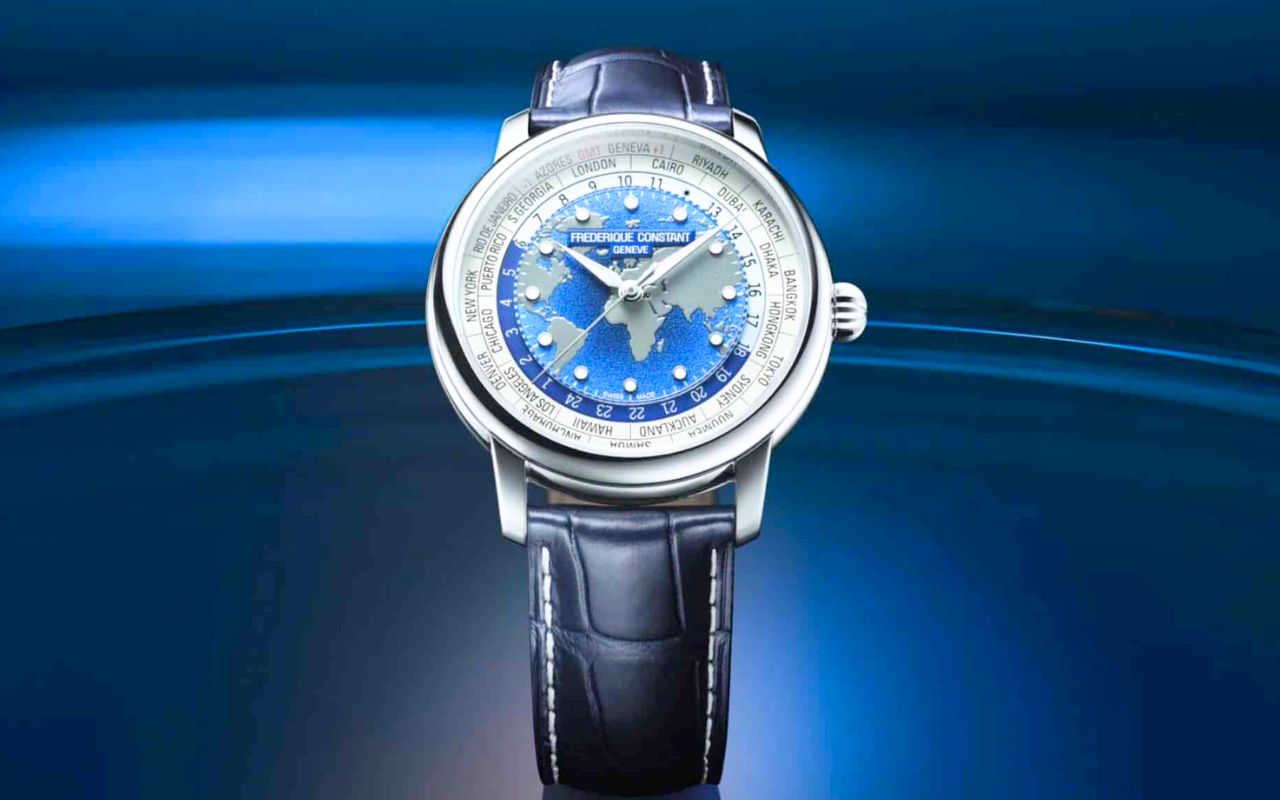
Frederique Constant is refreshing its Classic Worldtimer Manufacture with a smaller case, a new in-house automatic movement, and a headline upgrade that matters in daily life: a longer running time off the wrist.
The new generation is built around the Manufacture caliber FC-719, and it lifts the power reserve to 72 hours, up from 38, while keeping a modern 4 Hz beat rate. For frequent flyers and remote workers who bounce between time zones, the appeal is practical rather than flashy. A world-time display can turn a confusing travel week into something manageable, and Frederique Constant is betting that usability plus in-house mechanics still resonate in a luxury market where prices have climbed fast. The update also arrives with a redesigned case at 40 mm, aiming for broader wearability without abandoning the brand’s classic dress-watch posture.

Frederique Constant shrinks the case to 40 mm
The most immediate change is physical. Frederique Constant moves the Classic Worldtimer Manufacture into a 40 mm case, two millimeters smaller than the prior generation mentioned by watch media during the 2026 refresh cycle. On paper, that sounds minor. On wrist, it can be the difference between a watch that sits centered and one that feels spread out, especially for travelers who wear a watch for long days in transit.
A smaller diameter also fits the way many buyers have been shifting. Over the past few years, the market has leaned back toward moderate sizing, and a worldtimer is already visually busy, so extra dial real estate can start to look crowded. Frederique Constant’s redesign is framed as cleaner and more compact, and that matters when you are trying to read a city ring quickly while boarding or in a rideshare.
There is also a subtle travel logic to a more wearable case. A watch that slides under a cuff is easier to live with in meetings, and a watch that is less likely to snag is easier to manage with luggage straps and airport security bins. The brand is keeping the Classic line’s formal tone rather than pushing into a sport-watch silhouette, which may appeal to travelers who want one piece that can cover business and dinner.
The tradeoff is that a smaller case can expose design weaknesses if the dial layout is not carefully balanced. Worldtimers can feel cramped when the typography and rings fight for space. Frederique Constant is clearly aware of this risk, and the entire update leans on refinement rather than reinvention, with the goal of making the complication easier to use, not merely easier to sell.
Manufacture caliber FC-719 extends power reserve to 72 hours
Inside, the new Manufacture caliber FC-719 is positioned as a meaningful technical step. Frederique Constant describes it as the brand’s 35th in-house movement since its 1988 founding, developed and assembled within its manufacture workshops. The key improvement is the jump from 38 hours to 72 hours of power reserve, a near 90% increase that changes how the watch fits into real routines.
That extra runtime is not just a spec-sheet flex. A 72-hour reserve means you can take the watch off Friday night, wear something else over the weekend, and still have it running Monday morning. For travelers, it reduces the odds of arriving in a new city with a stopped watch and a wrong local time display. Frederique Constant attributes the gain to a longer mainspring and an optimized alloy composition.
The movement keeps a 4 Hz frequency, or 28,800 vibrations per hour, which is a common modern standard for stable timekeeping and a smooth seconds hand. The brand also emphasizes traditional finishing visible through a sapphire caseback, including sunburst Côtes de Genève on the bridges, circular graining on components, and a rotor with satin finishing and a snailed motif.
A nuance worth stating is that longer power reserve can sometimes invite questions about rate stability across the reserve, depending on how the torque curve is managed. Frederique Constant is signaling reliability by framing the FC-719 as building on the predecessor’s base while improving endurance. Buyers who care will still want to see real-world timing results over weeks, because a travel watch is only as good as the trust it earns.

The worldtimer display keeps 24 cities and day-night readability
The Classic Worldtimer Manufacture remains built around the idea that one watch can show the time across the globe. The display concept is familiar: a ring of 24 cities representing reference time zones, paired with a 24-hour ring that helps indicate whether it is day or night in a given location. For people coordinating calls between New York and Bangkok, or checking family time back home, that quick glance is the point.
Frederique Constant’s own messaging has long leaned into the “one watch, 24 time zones” promise, and the update keeps that identity intact. The brand describes the new version as cleaner, and that suggests the dial has been tuned for legibility, a common pain point on worldtimers where maps, rings, and markers can compete. The goal is to reduce the time it takes to interpret the dial.
For travelers, the city list is never neutral. A worldtimer is a snapshot of how a brand chooses to represent the world, and collectors notice changes. Some enthusiasts have commented in recent coverage about city-name updates on the dial, which shows how even small typography decisions can become a talking point. It is a reminder that this complication is part instrument, part cultural object.
The practical limitation is that worldtimers are built around standard time zones, while real travel includes exceptions, half-hour offsets, and daylight saving changes. The watch can still be extremely useful, but it will not replace a phone for edge cases. The value proposition is different: a mechanical overview of the world on your wrist, with enough clarity to guide decisions without pulling out a screen every time.
An 88-piece diamond edition adds a jewelry angle
Alongside the core collection, Frederique Constant is offering a limited, individually numbered edition of 88 pieces that shifts the worldtimer into more overt luxury territory. This version uses a light-blue sunray dial with a silver-toned world map in relief, and it adds 12 diamond hour markers. The bezel is set with 70 diamonds totaling 0.785 carats, which is a clear move toward buyers who want sparkle with their complication.
The “88” choice is framed as a nod to 1988, the year Frederique Constant was founded. Limited editions can sometimes feel like a shortcut to hype, but here the number ties directly to brand history, and the design changes are tangible rather than just a color swap. The watch is delivered with two interchangeable alligator straps, which fits the dressy positioning and gives owners an easy way to vary the look.
This edition also highlights a broader reality in the luxury watch market: brands increasingly segment the same mechanical platform into multiple lifestyle interpretations. One buyer wants a restrained travel tool. Another wants a statement piece that still carries an in-house movement and a recognizable complication. Frederique Constant is trying to speak to both without abandoning the Classic line’s identity.
A fair criticism is that diamond setting can distract from what makes this watch interesting mechanically, and it can narrow the audience. Some worldtimer fans prefer a strictly functional aesthetic and may see gems as unnecessary. Still, for a brand that has built its reputation on offering manufacture complications at comparatively accessible pricing, a higher-jewelry variant can function as a halo product that draws attention to the core models.
How the Classic Worldtimer stacks up against Highlife and older 42 mm versions
Frederique Constant already has another worldtimer in the catalog that speaks to a different customer: the sporty Highlife Worldtimer. Recent coverage of a Highlife Worldtimer collaboration lists the manufacture caliber FC-718 at 28,800 vph with a 38-hour power reserve and 100 meters of water resistance. That profile is built for a more casual, active use case, especially with integrated-bracelet styling and a rubber strap option.
By contrast, the Classic Worldtimer Manufacture update leans into dress-watch proportions and the new 72-hour reserve. The comparison is useful because it clarifies the brand’s strategy: the same complication can live in different design languages. If you want to swim with your worldtimer, the Highlife’s 100-meter rating is a concrete advantage. If you want a slimmer, more formal travel watch with longer reserve, the Classic update is the pitch.
Older retail listings for the Classics Worldtimer Manufacture Globetrotter reference a 42 mm case and a 38-hour reserve, plus 5 ATM water resistance, which helps explain why the new 40 mm, 72-hour formula is notable. Frederique Constant is not merely refreshing dial colors. It is changing two of the most lived-with specs: size and autonomy. For many buyers, those matter more than another limited dial.
There is still a real-world question: where does pricing land relative to competitors who offer world time at higher tiers, and how do buyers weigh brand prestige against mechanical value? Frederique Constant has historically competed on content, offering in-house complications at prices that undercut many Swiss rivals. The new Classic Worldtimer Manufacture looks designed to keep that reputation intact, but the market is crowded, and buyers compare hard.
To remember
- Frederique Constant updates the Classic Worldtimer Manufacture with a smaller 40mm case for broader wearability.
- The new in-house FC-719 movement boosts power reserve to 72 hours while keeping a 4 Hz beat rate.
- The worldtimer format retains 24-city, day-night readability aimed at frequent travelers and remote teams.
- A limited 88-piece edition adds diamonds, a relief world map, and interchangeable alligator straps.
- Compared with Highlife and older 42mm Classics models, the update focuses on size reduction and longer autonomy.
FAQ
- What is new about the Frederique Constant Classic Worldtimer Manufacture update?
- The update introduces a redesigned 40mm case and a new in-house automatic movement, the FC-719, with a 72-hour power reserve. The watch keeps the worldtimer concept with a 24-city ring and a 24-hour day-night indication, while aiming for a cleaner, more legible dial.
- Why does a 72-hour power reserve matter for a travel watch?
- A 72-hour reserve lets the watch keep running through a full weekend off the wrist, reducing the chance it stops during a trip or between rotations with other watches. For people moving between time zones, that convenience can be more valuable than minor cosmetic updates.
- Is the Classic Worldtimer Manufacture the same as the Highlife Worldtimer?
- No. The Highlife Worldtimer is a sportier line and has been listed with the FC-718 movement, a 38-hour power reserve, and 100 meters of water resistance in recent coverage. The Classic Worldtimer Manufacture focuses more on dress-watch styling and, in the latest generation, a 72-hour reserve via the FC-719.
- What is the limited edition version of the Classic Worldtimer Manufacture?
- Frederique Constant offers a limited, individually numbered edition of 88 pieces featuring a light-blue sunray dial, a silver-toned relief world map, 12 diamond hour markers, and a bezel set with 70 diamonds totaling 0.785 carats. It comes with two interchangeable alligator straps.
- What are the main limitations of a mechanical worldtimer for real travel?
- A worldtimer is built around standard time zones and can quickly show day-night context across 24 reference cities, but it will not automatically account for daylight saving changes or non-standard offsets in every region. Many travelers use it as an at-a-glance tool while relying on a phone for edge cases.
Sources
- Frederique Constant Updates the Classic Worldtimer Manufacture | WatchTime
- 【F】 Ace × Frederique Constant Highlife Worldtimer Amsterdam
- Classics Worldtimer Manufacture Globetrotter 42mm Watch– James Free Jewelers
- Introducing: The New Frederique Constant Classic Worldtimer Manufacture
- Manufacture Classic Worldtimer Watch FC-718NWM4H6 | Frederique Constant
